Home / Blog Details
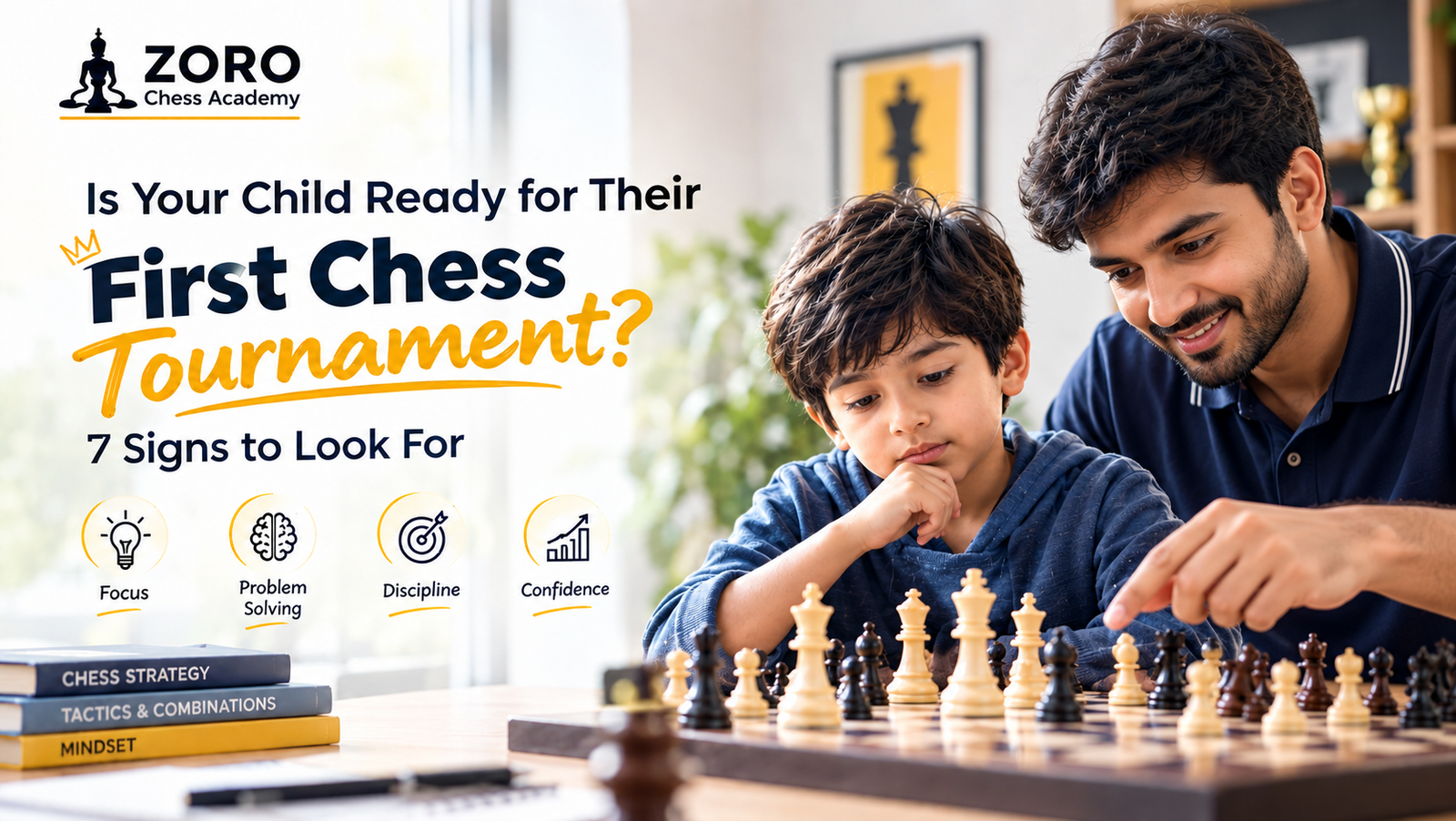
Your child enjoys chess at home, but how do you know when they are ready for their first tournament?
Many parents think children need an advanced rating before competing. They don't. For a first tournament, basic chess knowledge, concentration, confidence, and interest can matter more than advanced strategies. These seven signs can help you decide.
Your child might be ready when they can:
If several of these signs apply to your child, they could be ready for their first tournament.
Your child should be able to play a full game without constant guidance. They should understand piece movements, captures, check, checkmate, castling, and draws.
They do not need to memorise complicated openings. For a first tournament, understanding the fundamentals and making their own decisions is more important.
Tournament chess can take longer than a casual game at home. Children may need to wait while their opponent thinks and remain focused when the position becomes difficult.
Ask yourself:
Can my child stay interested without becoming distracted after a few minutes?
If they can follow the game until it finishes, they are developing an important tournament skill. Regular complete games can improve concentration and patience.
Children often make quick moves during casual games. Tournament chess requires more careful decisions.
Encourage your child to ask:
They do not need to calculate many moves ahead. Simply pausing, checking the board, and thinking before moving is a good sign.
A first tournament may include wins, losses, and unexpected mistakes. Your child does not need to enjoy losing, but they should be able to accept the result and continue playing.
Instead of asking only, "Did you win?", try asking:
"What did you learn from the game?"
This helps children focus on improvement rather than only the result.
Your child's interest matters. They may be ready if they ask about competitions, want to play new opponents, enjoy challenges, or want to test their skills.
When the motivation comes from the child, the tournament is more likely to feel exciting rather than stressful.
Avoid comparing your child with other players. Every child develops chess skills at a different pace.
Children also need to know how to behave during a tournament. Explain that they should:
Depending on the event, they may also need to understand how a chess clock works.
Knowing these basics can make the tournament environment feel less unfamiliar.
Knowing chess concepts is different from using them during a full game. Before entering a kids chess tournament, let your child play complete games against different opponents.
Useful preparation includes playing with a time limit, practising against different players, reviewing games afterwards, and identifying mistakes.
This helps children become more comfortable making decisions independently.
Explain what your child can expect, practise several complete games, review basic rules, and make sure they get enough rest. Get there early to give them time to settle in.
Avoid teaching lots of new openings the night before.A familiar routine and a confident mindset can help more than last-minute preparation.
Most of all, encourage your child to stay focused on each game as it comes.
No. There is no single rating that determines tournament readiness.
A beginner who understands the rules, can concentrate, follows instructions, and genuinely wants to compete can have a positive experience.
The first tournament should be treated as a learning experience, not an examination. Wins and losses can both provide useful lessons.
Tournament chess can gradually help children develop:
A first tournament is simply one step in that learning journey.
Parents considering a tournament may also wonder how to prepare their child. Tournament preparation involves more than memorising openings. Children need opportunities to play complete games, make independent decisions, analyse mistakes, and become comfortable with competitive situations.
At Zoro Chess Academy, structured chess training can help children strengthen fundamentals, practise practical gameplay, analyse games, and develop skills that support tournament participation.
Your child's first chess tournament does not need to be about winning a trophy.
If they can play independently, stay focused, think before moving, handle wins and losses, follow basic etiquette, and genuinely want to compete, they may be ready to take that first step.
The goal is to experience competitive chess, learn from each game, and build confidence. With regular practice and guidance, children can gradually become stronger and more comfortable players.
There is no universal age. Readiness depends on chess knowledge, concentration, confidence, and interest. Check the age category of the specific tournament.
Not necessarily. Some beginner tournaments accept children without an established rating, while others have specific requirements. Check the event rules before registering.
Let them play complete practice games, face different opponents, review their games, and learn basic tournament etiquette.
Encourage them to accept the result, take a short break, and identify something they can learn from the game.
Yes. Structured coaching can help improve fundamentals, tactics, strategy, calculation, decision-making, and game analysis while providing tournament-style practice.