Home / Blog Details
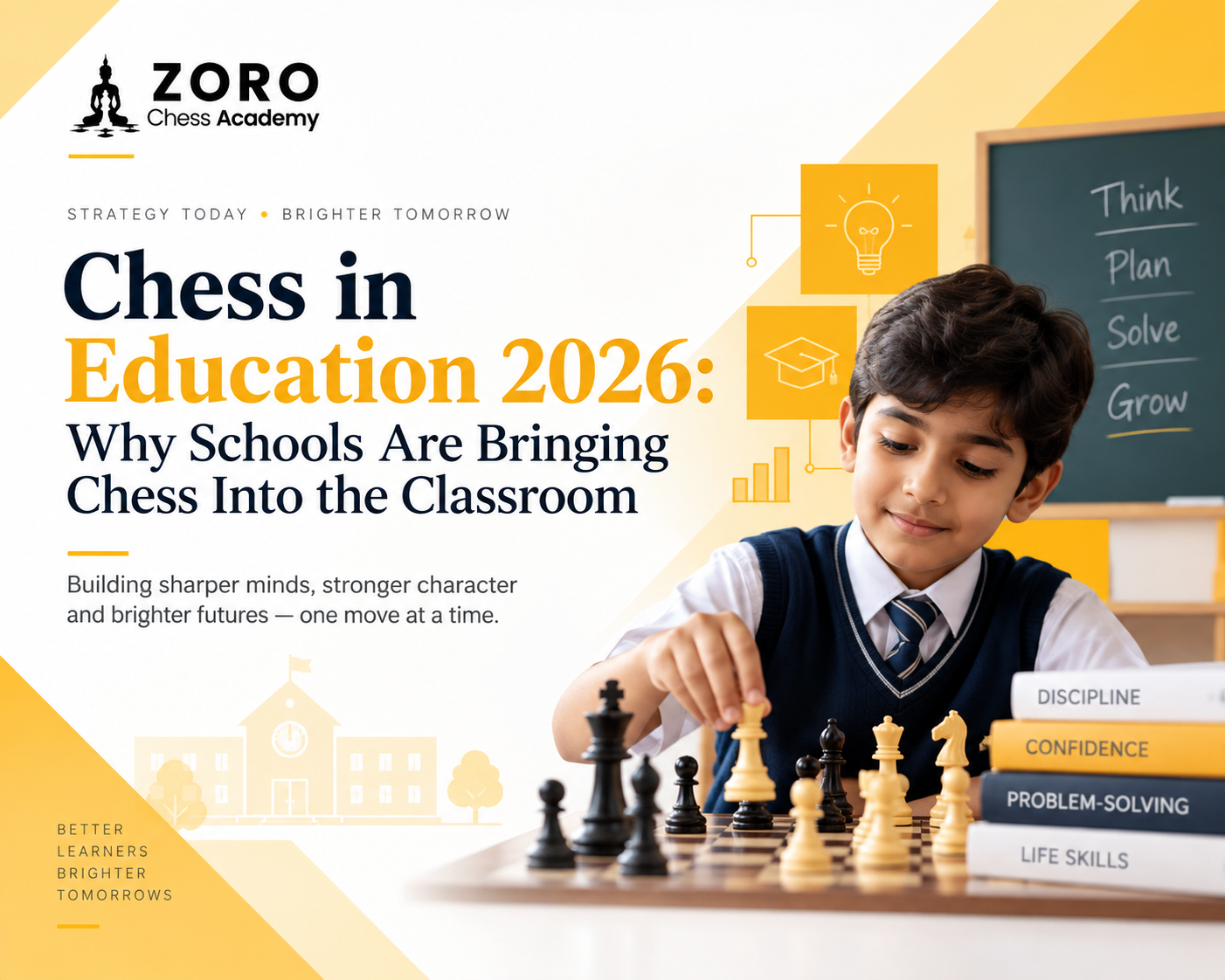
Classrooms in 2026 look different from those of a decade ago. Teachers and school leaders are increasingly searching for activities that go beyond textbooks and tests, activities that help students practise thinking carefully, staying focused, and handling both success and setbacks. One subject that has moved steadily from after-school clubs into the heart of school life is chess.
This year carries special significance. FIDE, the international governing body for chess, has recognised 2026 as the Year of Chess in Education. The designation reflects a wider recognition that chess can support useful learning habits rather than serve only as a competitive pastime. The central question for many parents, teachers and administrators is straightforward: why are schools bringing chess into the classroom?
Chess offers students a practical setting in which they must evaluate options, anticipate what might happen next, and accept the results of their decisions. A single position on the board can require a child to weigh several possible moves, consider the opponent’s likely reply, and choose the one that seems strongest. That process mirrors the kind of careful thinking schools hope to encourage across subjects.
The FIDE Year of Chess in Education highlights this educational potential on a global scale. Schools are exploring chess not because it promises instant academic gains, but because it creates repeated opportunities for students to practise concentration, strategic thinking, problem-solving and emotional control in a low-stakes environment. The game rewards patience and clear evaluation while making the cost of impulsive choices immediately visible.
A student facing a chess position cannot simply guess. They must examine the board, identify threats, compare candidate moves and decide which idea holds the most promise. This habit of pausing to evaluate options before acting transfers naturally to other areas of schoolwork, where careful comparison of ideas is equally valuable.
Chess rewards those who slow down. Students quickly learn that rushing leads to simple mistakes. Over time, many develop the ability to sit with a position, notice small details and resist the urge to move the first interesting piece they see. That practised focus can help in longer classroom tasks that demand sustained attention.
Every chess position presents a unique problem. The solution is rarely obvious, and the same pattern rarely appears twice in identical form. Students practise finding practical answers under mild pressure, then adjust when their first idea does not work. This flexible approach to difficulty is useful far beyond the board.
In chess, every move changes the position. Students experience the direct result of their choices, whether positive or negative. They learn that decisions carry weight and that reviewing what went wrong is often more useful than simply moving on. This feedback loop encourages thoughtful rather than impulsive behaviour.
Winning feels good; losing does not. Chess gives students regular chances to experience both, then analyse the game and try again. Learning to accept a loss without discouragement, to congratulate an opponent, and to return to the board with curiosity helps develop resilience and healthy competitive habits.
Chess does not need to replace core subjects. Many schools introduce it as a complementary activity that fits alongside existing lessons. Practical approaches include weekly chess periods, lunchtime or after-school clubs, short puzzle-solving sessions at the start of the day, and inter-school competitions that give students a goal to work toward.
Teachers can also use chess-based problem-solving exercises or simple game analysis to reinforce ideas about planning and evaluation. Beginner-friendly sessions lower the barrier for children who have never played, while structured coaching programmes provide clearer progression for those who show sustained interest. The key is consistency and age-appropriate guidance rather than formal tournament pressure from the first lesson.
Simply placing chessboards in a classroom is not enough. Effective programmes offer age-appropriate instruction that moves step by step, regular practice opportunities, constructive feedback, and some way of tracking progress. Qualified or experienced coaches help ensure students learn sound fundamentals rather than habits that later need unlearning. Competitive opportunities, when introduced at the right stage, give purpose to the practice without overwhelming beginners. Individual attention remains important, especially when children advance at different speeds.
When schools or parents seek more than informal play, structured programmes can fill the gap. Zoro Chess Academy, for example, offers a multi-level curriculum that takes students from absolute beginners through progressive stages covering strategy, tactics, openings, endgames and game analysis. Progress is tracked through platforms such as Chess.com and Lichess, with personalised feedback and clear milestones. Online and offline options, certificates at each stage, and preparation for tournaments allow learners to develop both chess skill and the mental habits that accompany careful play.
The emphasis remains on steady development rather than rapid results. Students receive guidance suited to their current level, with attention to focus, resilience and the ability to learn from mistakes—qualities that matter both on and off the board.
Chess gives students a practical environment in which to think, decide, adapt and learn from every move. As schools continue to explore chess in education during 2026 and beyond, the game’s greatest value may lie less in producing champions and more in giving young people repeated chances to practise clear thinking and emotional steadiness.
For parents and schools interested in introducing structured chess learning, programmes that combine careful progression with individual feedback can help students gain more from the experience. Exploring options such as those offered by Zoro Chess Academy is one practical next step for those ready to bring chess into the classroom with purpose.